
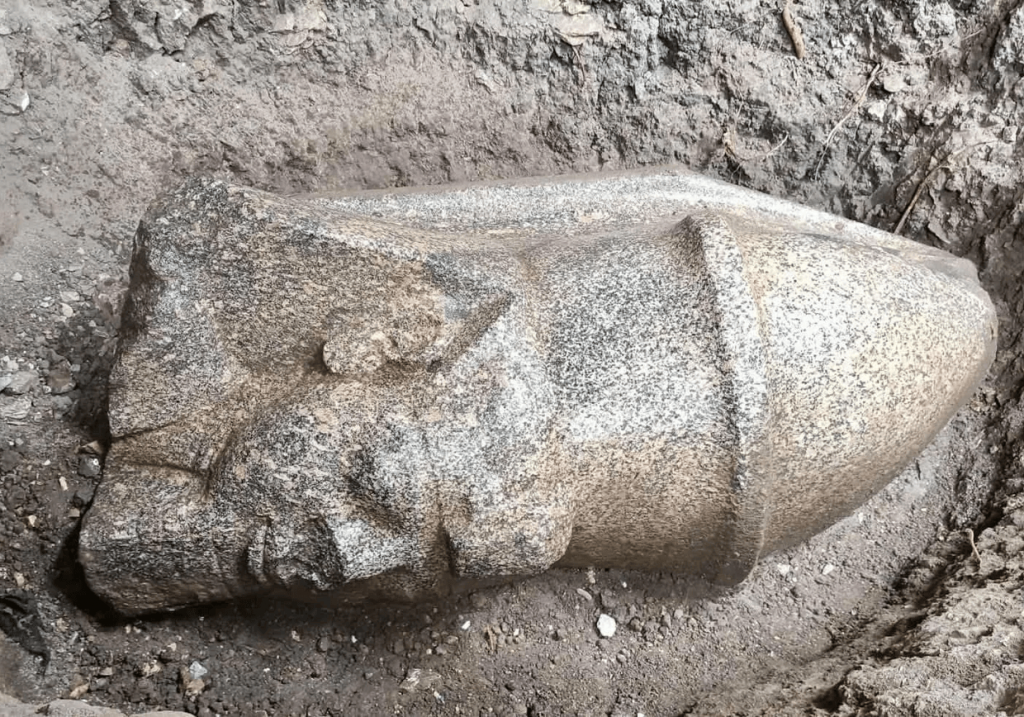
 (Christian News) — In the fertile flatlands of the Nile Delta, where history and Scripture forever intertwine, an ordinary day of tilling the soil has yielded an extraordinary glimpse into the ancient past.
An Egyptian farmer, Khaled al-Shahat, working his land in the Al Gharbia Governorate, struck an unusual stone embedded in the earth—a discovery that has since led antiquities experts to unearth monumental statues of Pharaoh Ramses II, the very monarch widely regarded by many biblical historians as the oppressive ruler of the Exodus account.
According to Egypt’s Ministry of Tourism and Antiquities, the initial find was a pink granite block measuring over 4 feet long, inscribed with the royal titles of Ramses II, including “Sa-Ra” (Son of Ra, the sun god) and “Nesw-Bity” (King of Upper and Lower Egypt).
Prompted by the farmer’s report to local authorities, a team of archaeologists descended upon the property. Beneath the soil, excavation crews uncovered a colossal 5.25-foot-tall stone head wearing the double crown of Upper and Lower Egypt, alongside fragments of a second royal statue stretching nearly 8 feet in length. Experts estimate the full statue of the pharaoh would have stood an imposing 28 feet tall.
A Biblical Echo in the Dust
For students of the Holy Scriptures, the name Ramses carries immense weight. The Book of Exodus records that the children of Israel, living under harsh bondage in Egypt, were forced to build store cities for Pharaoh:
“Therefore they did set over them taskmasters to afflict them with their burdens. And they built for Pharaoh treasure cities, Pithom and Raamses.” (Exodus 1:11)
For generations, the monumental scale of Egypt’s dynasties—their colossal stone monuments, carved titles, and boasts of divine right—stood in silent testimony to the world power that once held the patriarchs and the tribes of Israel in captivity, before the Lord delivered His people with a mighty hand and an outstretched arm through Moses.
The newly recovered artifacts, bearing the formal Horus name of Ramses II (Hor Ka Nakht Mery Maat), serve as a physical reminder of the proud kingdoms of antiquity that rose and fell, contrasting sharply with the enduring promises of God.
Honored for Integrity
In a notable turn of events, local authorities praised the farmer, Khaled al-Shahat, not only for his discovery but for his civic honesty in immediately notifying the ministry rather than attempting to conceal or illicitly trade the antiquities.
Egypt’s Minister of Tourism and Antiquities, Sherif Fathy, traveled directly to al-Shahat’s village to honor him and his wife on their own land, presenting them with certificates of appreciation and a sponsored pilgrimage journey.
As archaeological work continues on the farmland, scholars hope to glean further insight into the ancient architectural history of the Nile Delta region—unearthing more fragments of a world that walked the pages of ancient history long before the modern era.
Become a Christian News Network Supporter...

 Dear Reader, has ChristianNews.net been of benefit and a blessing to you? For many years now, the Lord has seen fit to use this small news outlet as a strong influential resource in keeping Christians informed on current events from a Biblical worldview. With much compromise and many falsehoods in modern-day Christianity, we strive to bring you the news by keeping Christ and His word in focus. If you have benefited from our news coverage, please prayerfully consider becoming a Christian News supporter by clicking here to make a one-time or monthly donation to help keep the truth of God's word widely and freely published and distributed.
